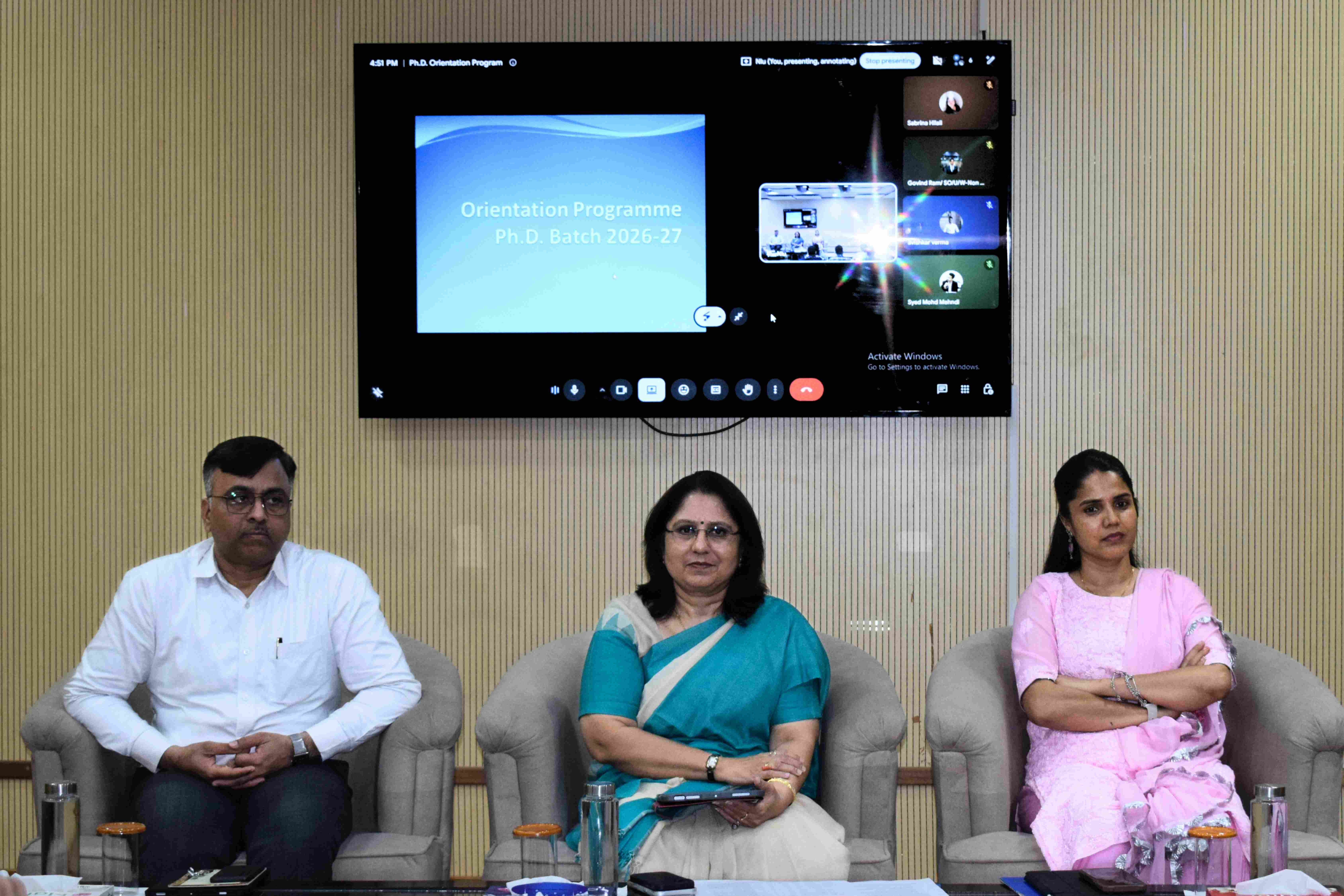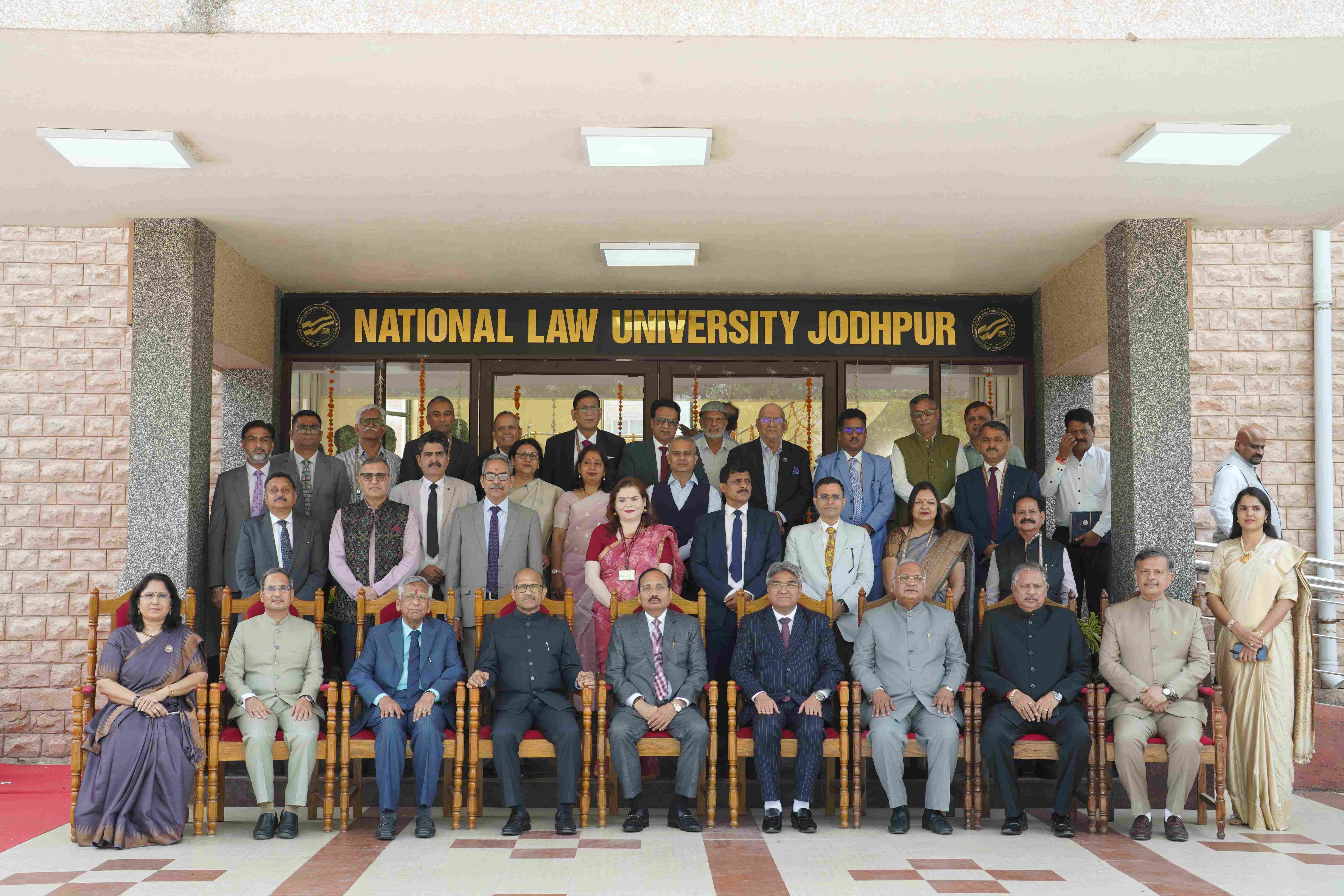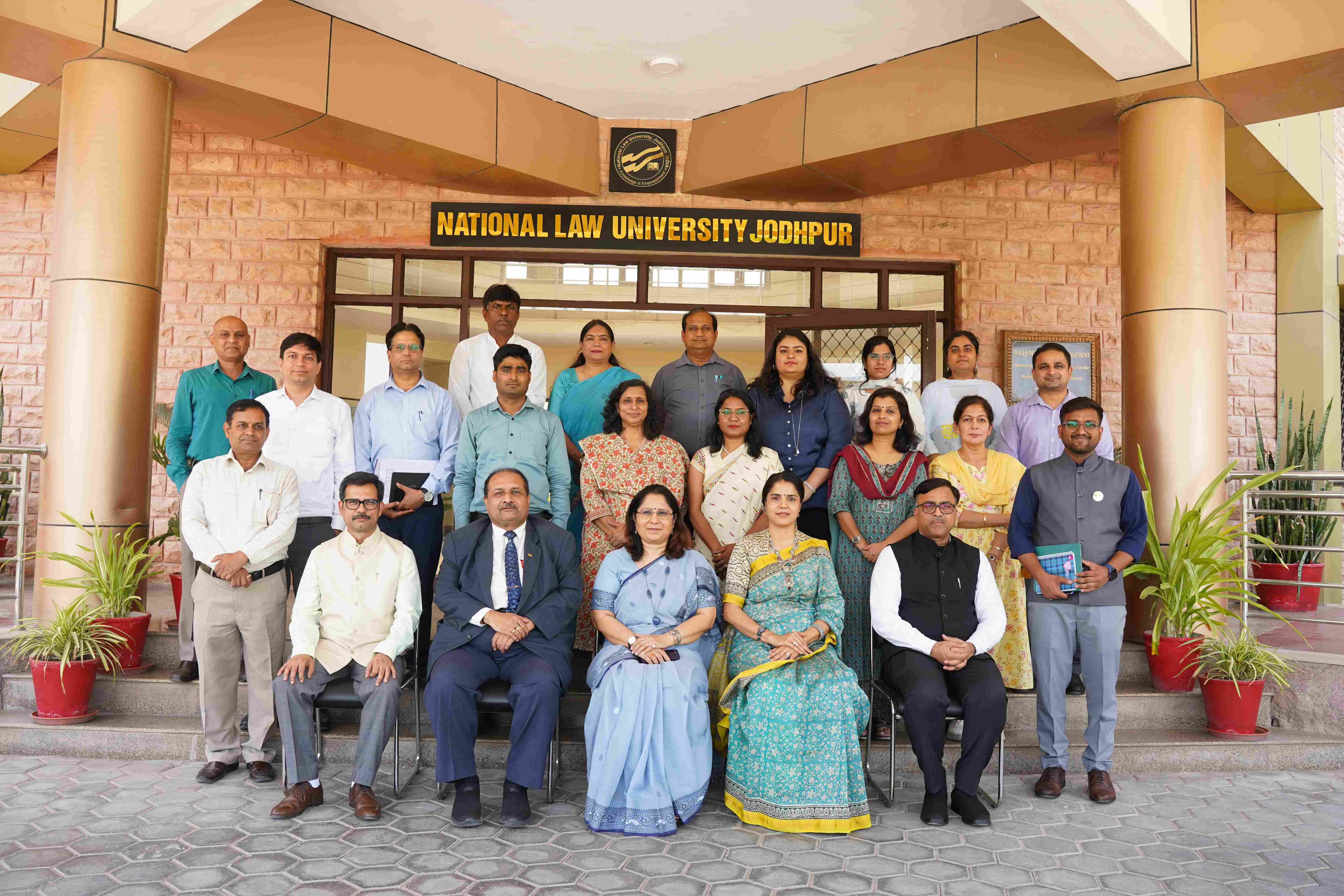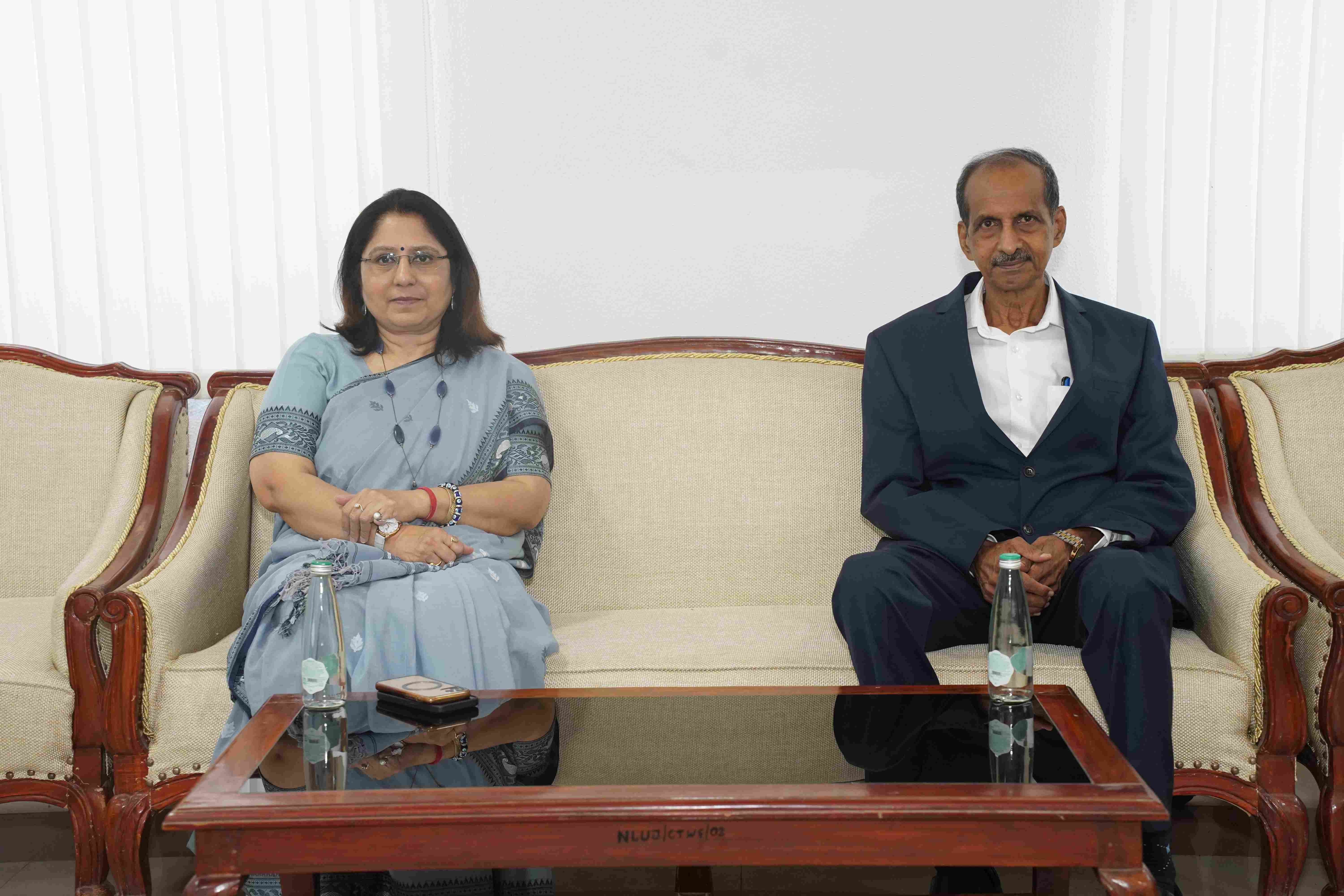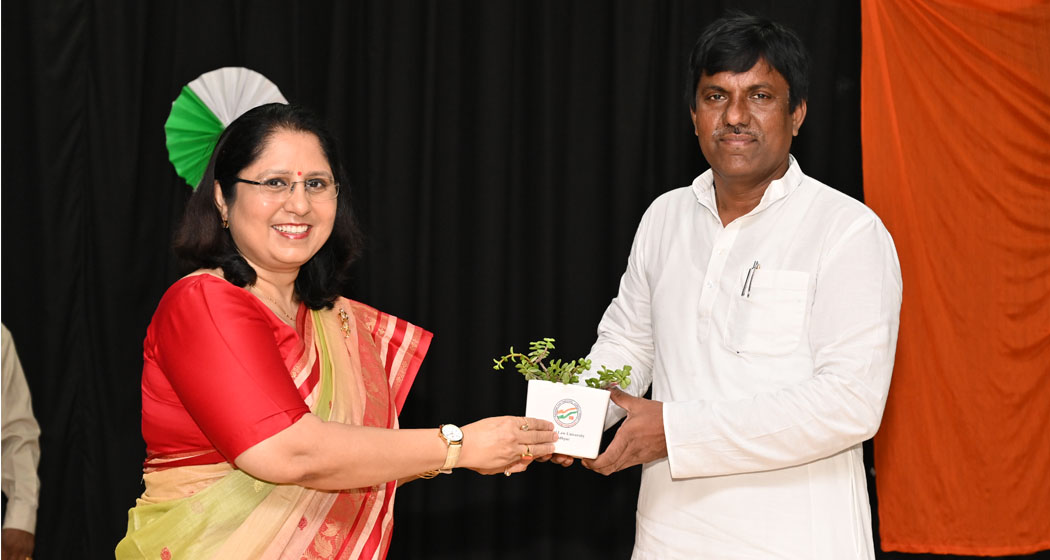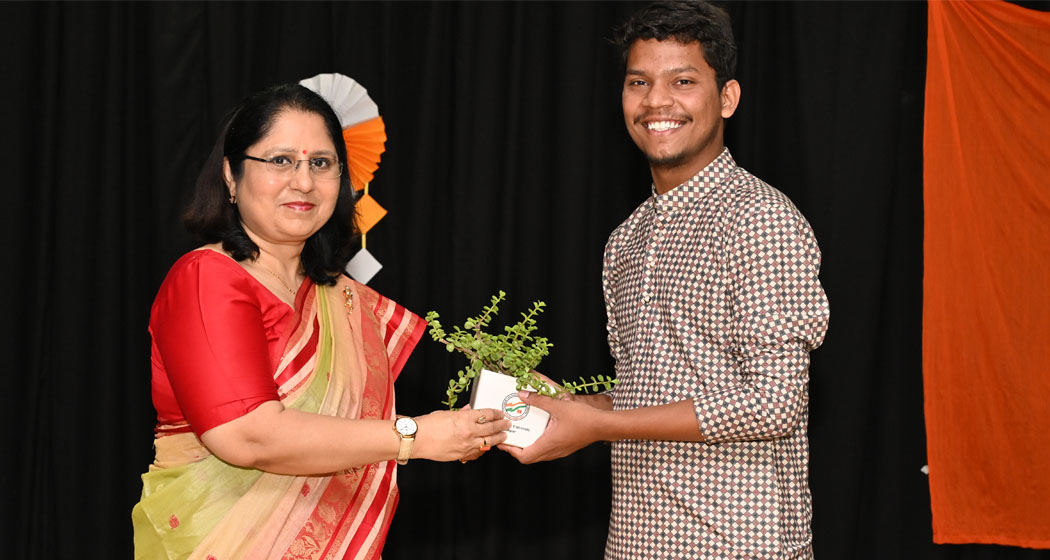
Jodhpur, 25 September 2026: The two-day international conference on “Digital Transformation: Integrating AI for Next Generation Libraries (ICDT 2026)” commenced today at National Law University, Jodhpur (NLU Jodhpur). The conference witnessed participation from academicians, library and information science professionals, researchers, and representatives of various institutions from 12 states across the country.
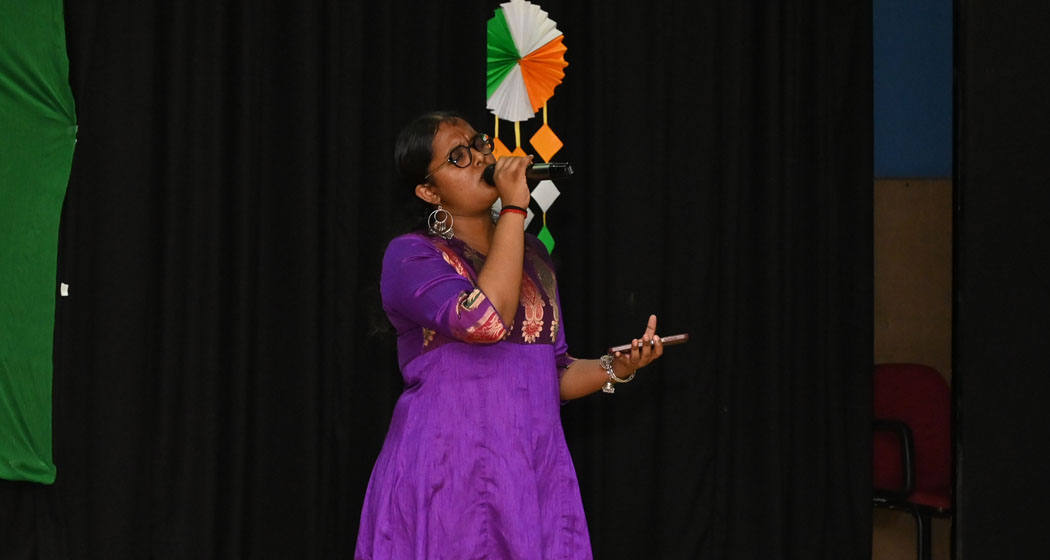
The inaugural session commenced with the National Song and the National Anthem. This was followed by insightful addresses by distinguished speakers on digital transformation, artificial intelligence, and the evolving role of libraries in the digital era. A brief overview of the conference was presented by Dr. Vinod D., Organising Secretary and Deputy Librarian, NLU Jodhpur, highlighting the key objectives and academic sessions of ICDT 2026.
The Welcome Address was delivered by Prof. (Dr.) Harpreet Kaur, Vice Chancellor, NLU Jodhpur and Patron of the Conference. Welcoming the distinguished guests, experts, and participants, she highlighted that the library is a vital and central component of any university. She also referred to initiatives such as e-PG Pathshala, emphasising the growing significance of digital resources in education and knowledge dissemination.
The Guest of Honour, Dr. Priya Rai, Director General, Delhi Public Library, Ministry of Culture, Government of India, delivered the Inaugural Address. She highlighted the significance of ICDT 2026 and noted that this is the fourth edition of ICDT being hosted by NLU Jodhpur. She observed that the present period represents a phase of extensive digital transformation in books, libraries, theses, and knowledge resources. She also highlighted the transition from the traditional concept of a collective library towards a user-centric library.
The Chief Guest, Prof. (Dr.) Devika P. Madalli, Director, INFLIBNET Centre, Gujarat, delivered the Special Address and highlighted the role of digital knowledge resources in higher education. She spoke about the conceptualisation and development of the INFLIBNET Centre, describing it as an important support system for higher education. She also highlighted digital initiatives such as Shodhganga and discussed the importance of digitisation of research and knowledge resources. She further referred to the “One Nation, One Subscription” initiative in the context of wider access to digital journals and research resources.
The Keynote Address was delivered by Prof. (Dr.) Kim Nayyer, Edward Cornell Law Librarian, Associate Dean for Library Services and Professor, Cornell Law University, USA. She shared her perspectives on the changing role of digital libraries and the future of knowledge systems. Referring to libraries as a “safe haven,” she highlighted that libraries are not merely spaces for preserving books and resources, but also serve as important spaces for the safety of the mind, protection from fake news, and preservation of knowledge. She further emphasised the continuing relevance of libraries in ensuring access to reliable knowledge in the digital age.
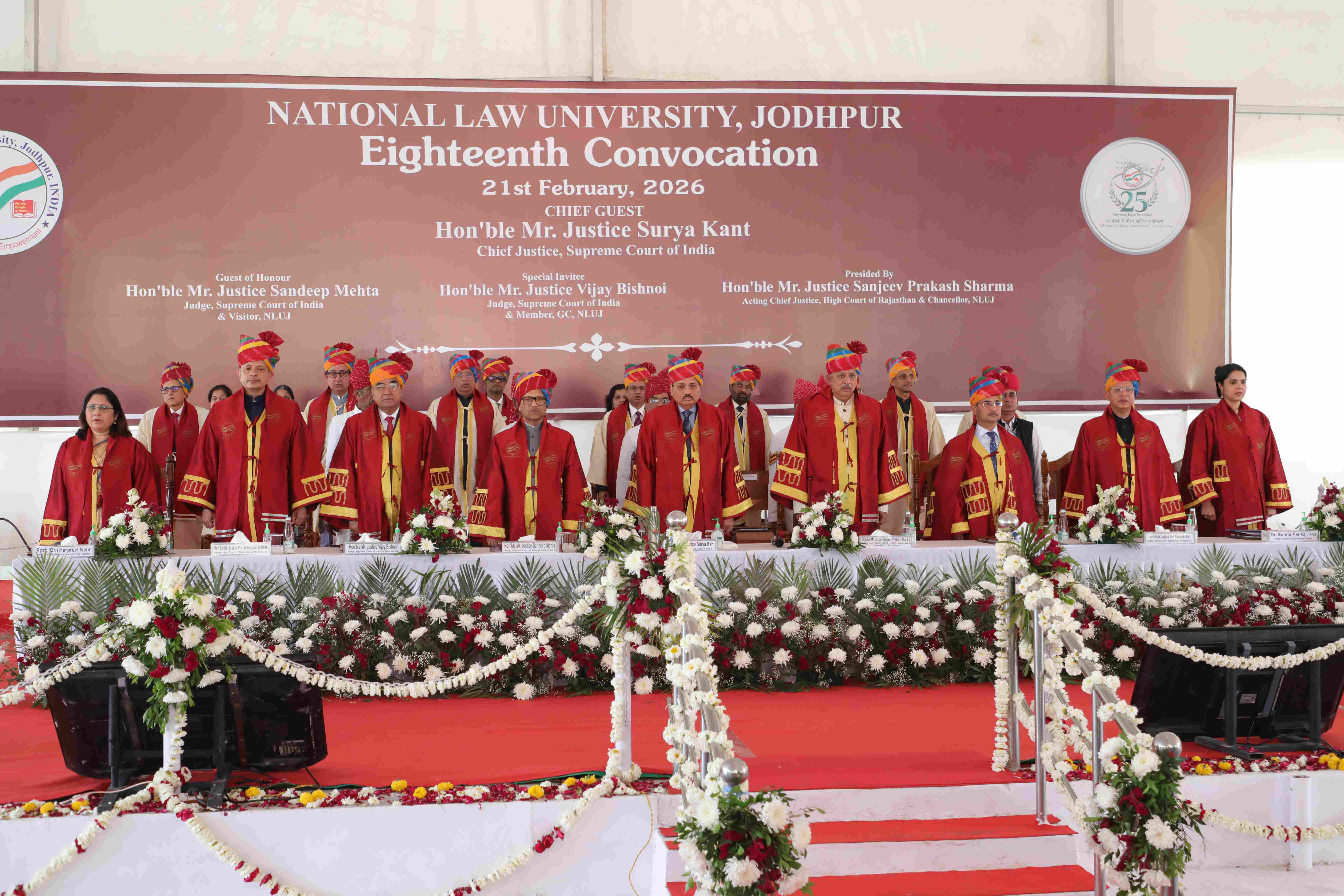
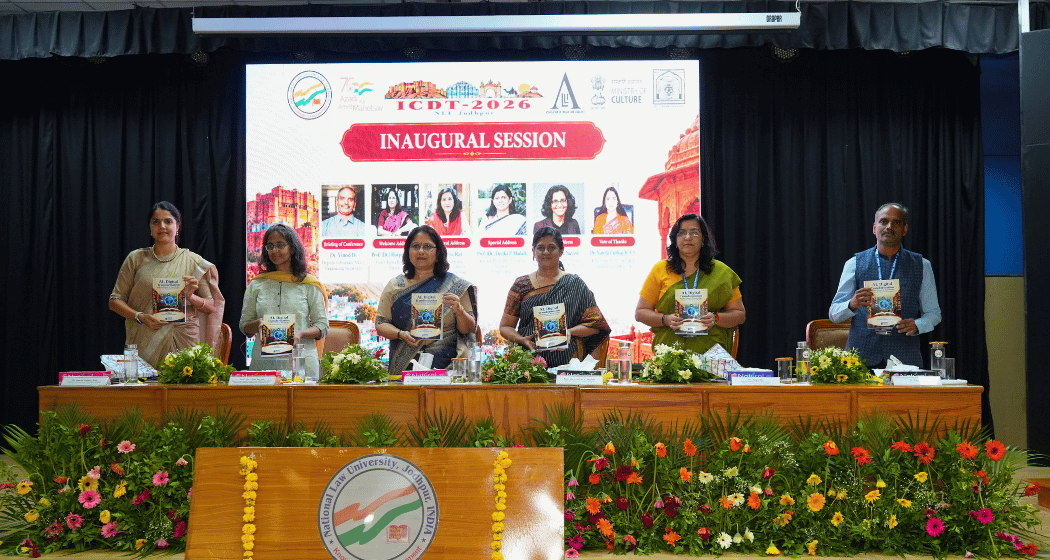
During the inaugural session, the Conference Proceedings of ICDT 2026 were also released. Titled “AI, Digital Transformation and the Future of Knowledge: The Next Generation Library,” the proceedings were released by the dignitaries on the dais.
The session concluded with the Vote of Thanks delivered by Dr. Sunita Pankaj, R.A.S., Registrar, NLU Jodhpur and Conference Director. Assistant Librarian Dr. Subhranshubhusan Sahoo also played an important role in the smooth conduct and coordination of the conference.
The conference also witnessed international participation, with delegates joining from Indonesia, the USA, Argentina, Mauritius, and Nepal.
Following the inaugural session, the academic sessions of the conference continued, with experts and participants engaging in discussions on artificial intelligence, digital transformation, knowledge management, digital preservation, knowledge discovery, and the future of user-centric libraries.
Plenary Session–I was held on the theme “From Repositories to Intelligent Knowledge Ecosystems: Reimagining Academic Libraries in the Generative AI Era.” This was followed by Technical Session–I on “AI-Driven Digital Transformation in Academia” and Technical Session–II on “Digital Preservation, Knowledge Discovery and Indian Knowledge Systems.”
Through ICDT 2026, experts from India and abroad are engaging in extensive discussions on the growing impact of artificial intelligence and digital technologies in higher education, library and information science, along with the preservation, discovery, and utilisation of knowledge resources and the evolution of future-ready, user-centric libraries.